









The Federal Government’s approval to upgrade Onne, Delta, Rivers and Calabar ports is potentially important for Nigeria’s maritime economy. A stronger port network could reduce pressure on Lagos, improve regional trade and lower the cost of moving goods.
However, approval is only the beginning. Nigerians should welcome the announcement without assuming that the promised benefits have already arrived. The real test will be whether the government can fund, execute and complete the projects—and whether users eventually experience faster cargo clearance and lower logistics costs.
Why the port upgrade matters
Nigeria has long depended heavily on ports in Lagos. That concentration places pressure on roads, terminals, customs operations and surrounding communities. Developing ports in the South-South could distribute cargo traffic more efficiently and bring maritime activity closer to businesses and producers in the region.
Recent cargo data show that Nigeria’s port system is already handling significant and growing volumes. In the third quarter of 2025, total port cargo throughput reportedly reached 33.52 million tonnes, up from 28.84 million tonnes in the same period of 2024—a year-on-year increase of 16.2 per cent. Container traffic also rose by 18.9 per cent to 546,931 TEUs. Onne accounted for about 17 per cent of the reported cargo volume, while Calabar recorded the smallest share among the ports listed.
These figures suggest that additional capacity and better infrastructure may be necessary. They also show why port modernisation should be treated as an economic priority rather than merely a regional development promise.

The evidence supports caution
A 2025 study of Nigerian ports found major delays in both ship operations and cargo processing. The study reported shipping-trade processing delays of approximately:
- 9 days at Onne
- 16.73 days at Lagos Apapa
- 14.10 days at Warri
- 15.60 days at Rivers Port
- 13.40 days at Calabar
The study compared these figures with a global cargo-processing benchmark of about 4 days. It also reported ship-turnaround delays ranging from 1.878 days at Onne to 5.340 days at Apapa, compared with a benchmark of approximately 1.20 days.
These numbers make the government’s plan understandable—but they also justify public caution. If the existing problems involve delays of several days beyond international benchmarks, simply announcing an upgrade will not solve them. The project must address the causes of the delays: insufficient equipment, slow documentation, poor inter-agency coordination, inadequate road connections and inefficient gate operations.
Approval is not the same as delivery
The government’s announcement is a policy commitment, not proof that the ports have been transformed. Before Nigerians celebrate, several questions require clear answers:
- How much will the projects cost?
- Where will the funding come from?
- What is the implementation timetable?
- Which terminals and facilities are covered?
- Who will supervise construction and operations?
- Will the projects involve new concessions or extensions of existing concessions?
- What performance targets will operators be required to meet?
- How will corruption, abandoned contracts and cost overruns be prevented?
Without answers to these questions, the announcement remains broad. A serious port-development programme should publish project scopes, budgets, milestones, responsible agencies and expected results.
Ports cannot succeed without supporting infrastructure
A modern port is not just a quay, crane or terminal. It is part of a wider logistics chain. Even if the terminals are upgraded, cargo will continue to face delays if roads are damaged, rail connections are missing, customs procedures are slow or trucks cannot enter and exit efficiently.
The government therefore needs to coordinate port upgrades with:
- Reliable access roads.
- Functional rail connections.
- Inland container depots and cargo distribution centres.
- Digital customs and port documentation.
- Automated gate-in and gate-out systems.
- Adequate cargo-handling equipment.
- Secure waterways and port surroundings.
- Clear procedures for truck scheduling.
- Efficient links to industrial and agricultural production areas.
The 2025 port-performance study specifically recommended more cranes and forklifts, digitalised yard operations, automated gate processes and improved documentation management.
The danger of celebrating too early
Premature celebration can weaken public accountability. Once an announcement is treated as a completed achievement, pressure may decline before construction begins. This is particularly risky for large infrastructure projects, where approvals can be followed by delays, redesigns, funding gaps and disputes over contracts.
A better approach is to recognise the approval as a welcome first step, while judging the project by measurable outcomes. Nigerians should look for:
- Actual budget releases.
- Published procurement details.
- Visible construction or rehabilitation work.
- Regular progress reports.
- Reduced vessel waiting time.
- Lower cargo dwell time.
- Faster customs clearance.
- Reduced demurrage and transport costs.
- Increased cargo volumes handled by the upgraded ports.
- Improved port-user satisfaction.
The most important question is not whether the government has approved the upgrade. It is whether businesses and consumers will eventually feel the impact through cheaper, faster and more reliable movement of goods.
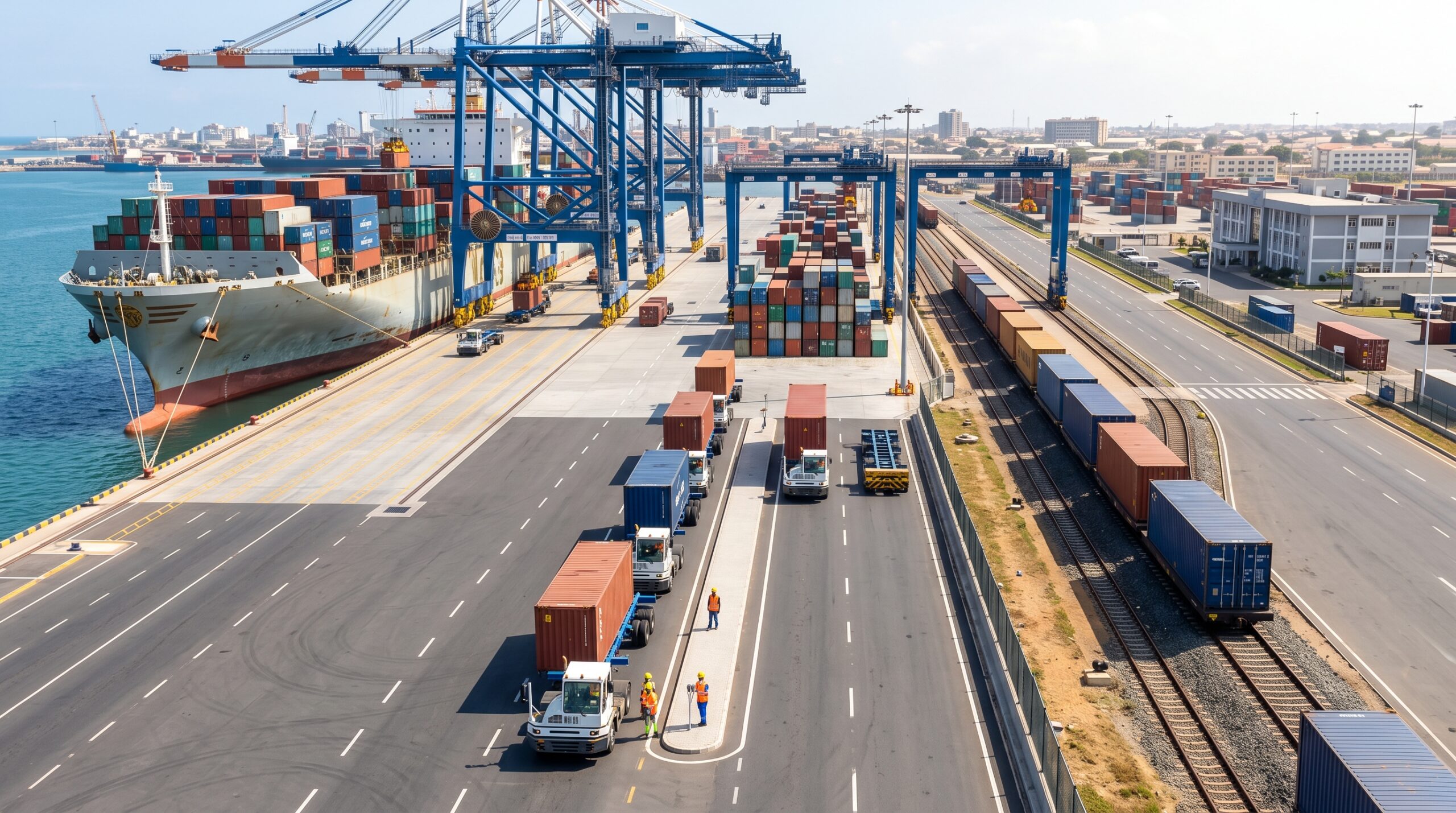
What success should look like
The government should establish clear targets before implementation begins. For example, the ports should aim to bring cargo-processing delays closer to the four-day benchmark identified in the study. Ship turnaround times should also move toward international standards.
Progress should be measured publicly every quarter. A useful performance dashboard could disclose:
| Indicator | Current concern | Desired result |
|---|---|---|
| Cargo-processing time | Several ports record delays far above four days | Clear reduction toward the benchmark |
| Ship turnaround time | Delays exceed the reported 1.20-day benchmark | Faster vessel handling |
| Cargo throughput | Traffic is increasing | Capacity grows without new congestion |
| Port equipment | Insufficient cranes and handling machinery | More reliable and productive equipment |
| Documentation | Manual and fragmented processes | Digitised, single-window processing |
| Inland transport | Weak road and rail links | Faster cargo evacuation |
| Cost to importers | Demurrage and logistics expenses remain high | Lower and more predictable costs |
A balanced position
Being cautious does not mean opposing the port upgrade. On the contrary, public scrutiny can help ensure that the project is properly executed.
The upgrade is strategically reasonable because Nigeria needs a more balanced port network. Onne, Delta, Rivers and Calabar could play a larger role in regional trade if they receive the right investment and are connected to efficient road, rail and inland logistics systems.
But Nigeria’s history of infrastructure announcements means citizens are justified in demanding evidence of implementation. The government should move from broad approval to detailed planning, transparent funding, construction and measurable performance.
Conclusion
The approval to upgrade Nigeria’s ports is welcome, but it is not yet a reason for full celebration. The country’s port problems are measurable: cargo-processing delays in some locations are more than three times the reported four-day benchmark, while ship turnaround times remain above international expectations.
The correct position is therefore cautious optimism. Nigerians should support the objective, but reserve celebration for the point at which the projects are funded, built and producing visible results.
Approval is a promise. Implementation is performance. Results are the real achievement.

Jean Claude Agbortem Obi is a business consultant specialising in market entry, business development and commercial expansion across African markets, with a particular focus on FMCG and pharmaceutical businesses.
Through Routrix Africa, he works with international and African companies seeking to navigate the complexities of African markets, including distributor selection, route-to-market development, market intelligence and commercial expansion.
His perspective is grounded in a practical understanding of the realities that determine whether a brand succeeds beyond the boardroom and reaches the consumer at the point of purchase.
His central philosophy is simple: African market entry should not end with getting into the market. The real objective is building a sustainable pathway to commercial success.