







After my last article on why global manufacturers are choosing contract manufacturing over building factories in Africa, I received solicitations from international executives who are interested in the African consumer market and particularly in local manufacturing partnerships.
Though I spoke with them individually to guide them so they don’t make errors that can cost them significant capital, time, and resources, I felt it would be useful to share some of those insights here so that others considering Africa can benefit from them.
One thing I quickly discovered from these conversations is that many foreign companies approach Africa with the right products but the wrong partner selection process.
They often assume that finding a local manufacturing partner is similar to finding one in Europe, North America, or Asia. Unfortunately, that assumption has cost many businesses millions.
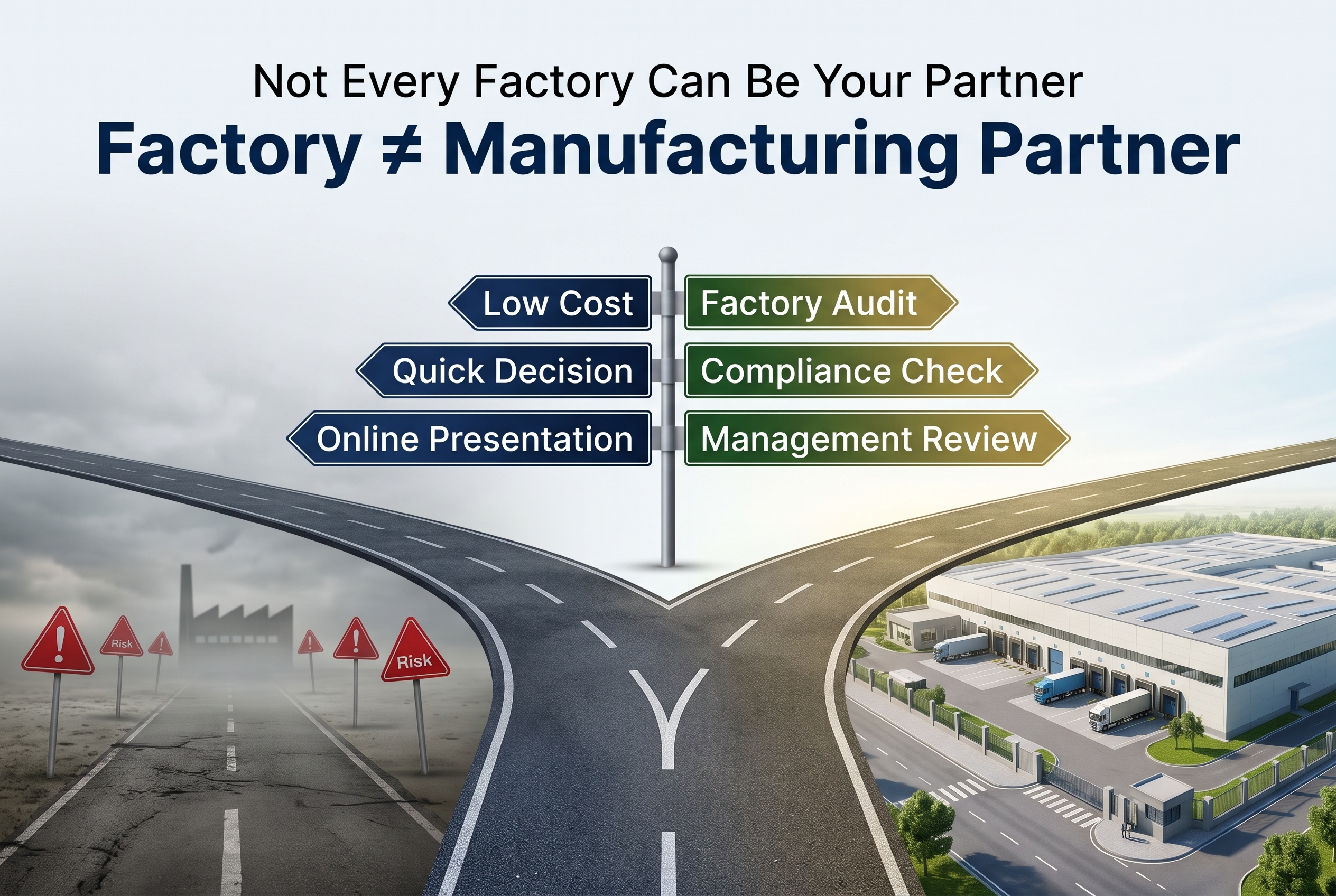
Over the years, I have met international companies that selected manufacturing partners based primarily on online presentations, facility photos, referrals from intermediaries, or even a single visit. Several months later, they encountered production quality issues, regulatory compliance challenges, delayed deliveries, and in some cases, complete project failures.
The truth is simple:
Not every factory that can manufacture your product can become your manufacturing partner.
There is a big difference.
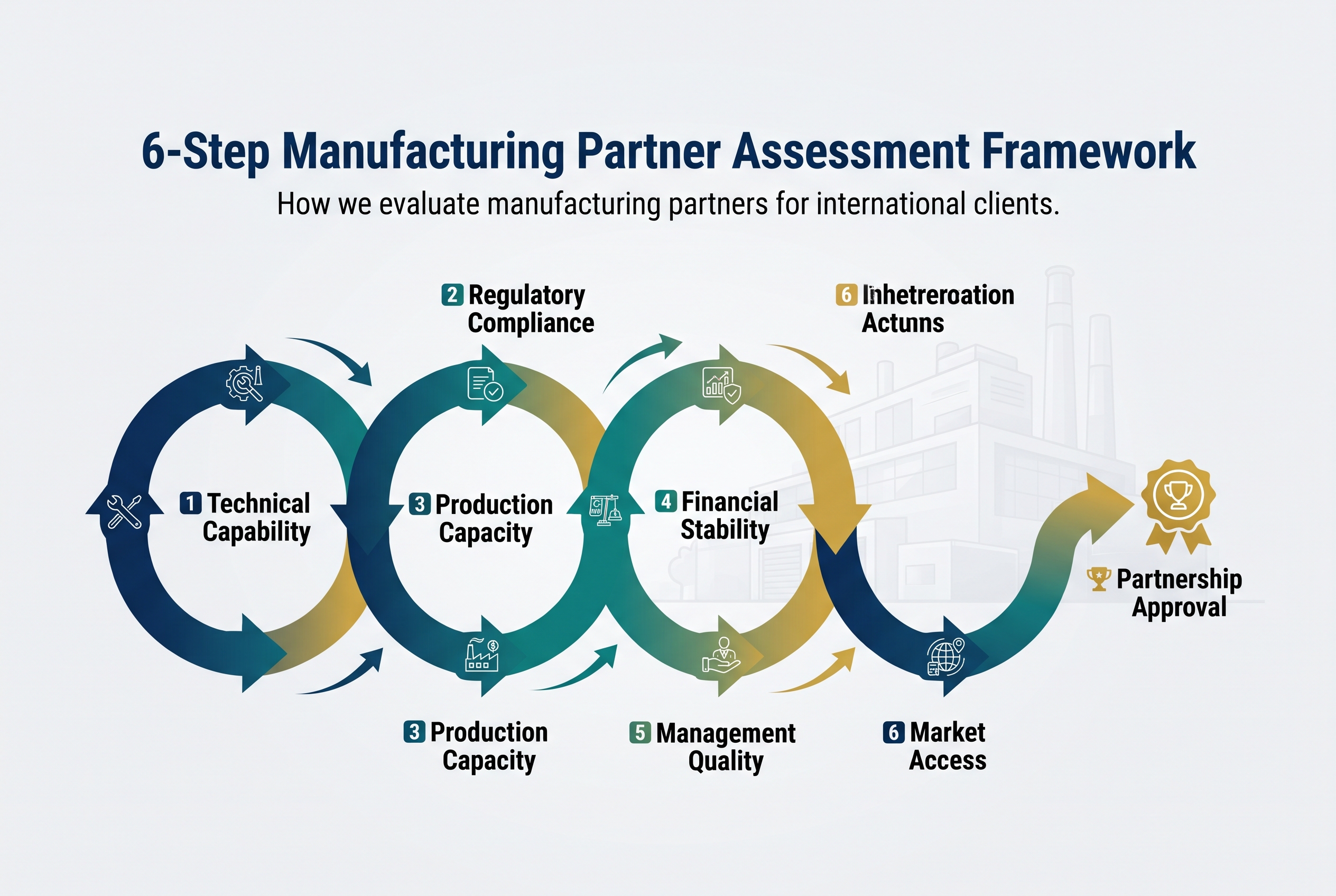
Start with Capability, Not Capacity
One of the most common mistakes I see is companies focusing solely on production capacity.
Questions like:
-
How many units can they produce monthly?
-
How many production lines do they have?
-
What is their factory size?
These questions matter, but they should not come first.
I always advise clients to first determine whether the facility can consistently meet their quality standards, operational procedures, and technical requirements.
A factory with excess capacity but weak quality systems can quickly become a liability.
Verify Regulatory Compliance Yourself
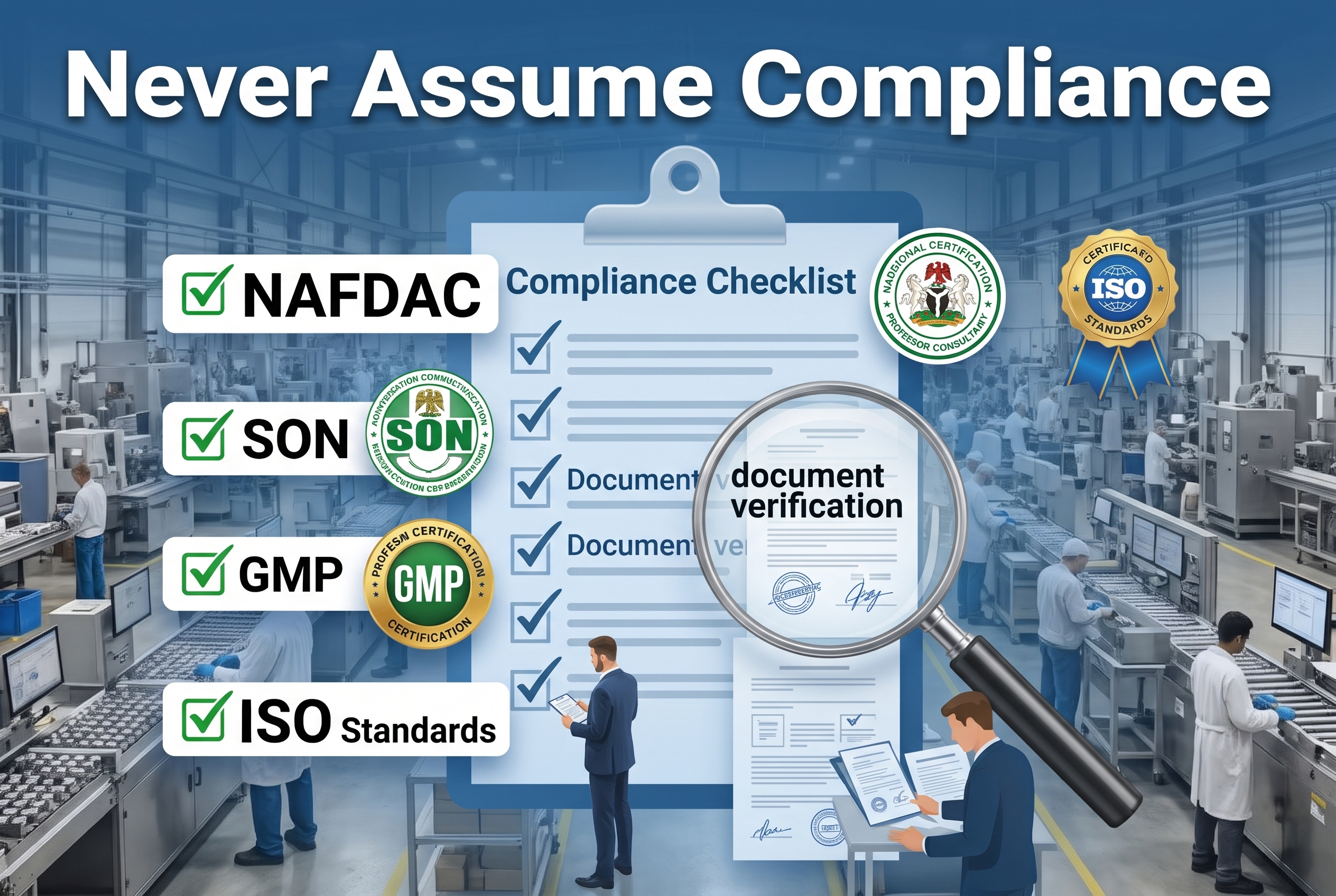
Never assume compliance.
I have seen situations where executives were told a facility possessed all required certifications, only to discover later that approvals had expired or did not cover the specific product category.
In Nigeria, depending on your industry, compliance may involve agencies such as NAFDAC, SON, or other sector regulators.
Always conduct independent verification. Trust is important, but verification is essential.
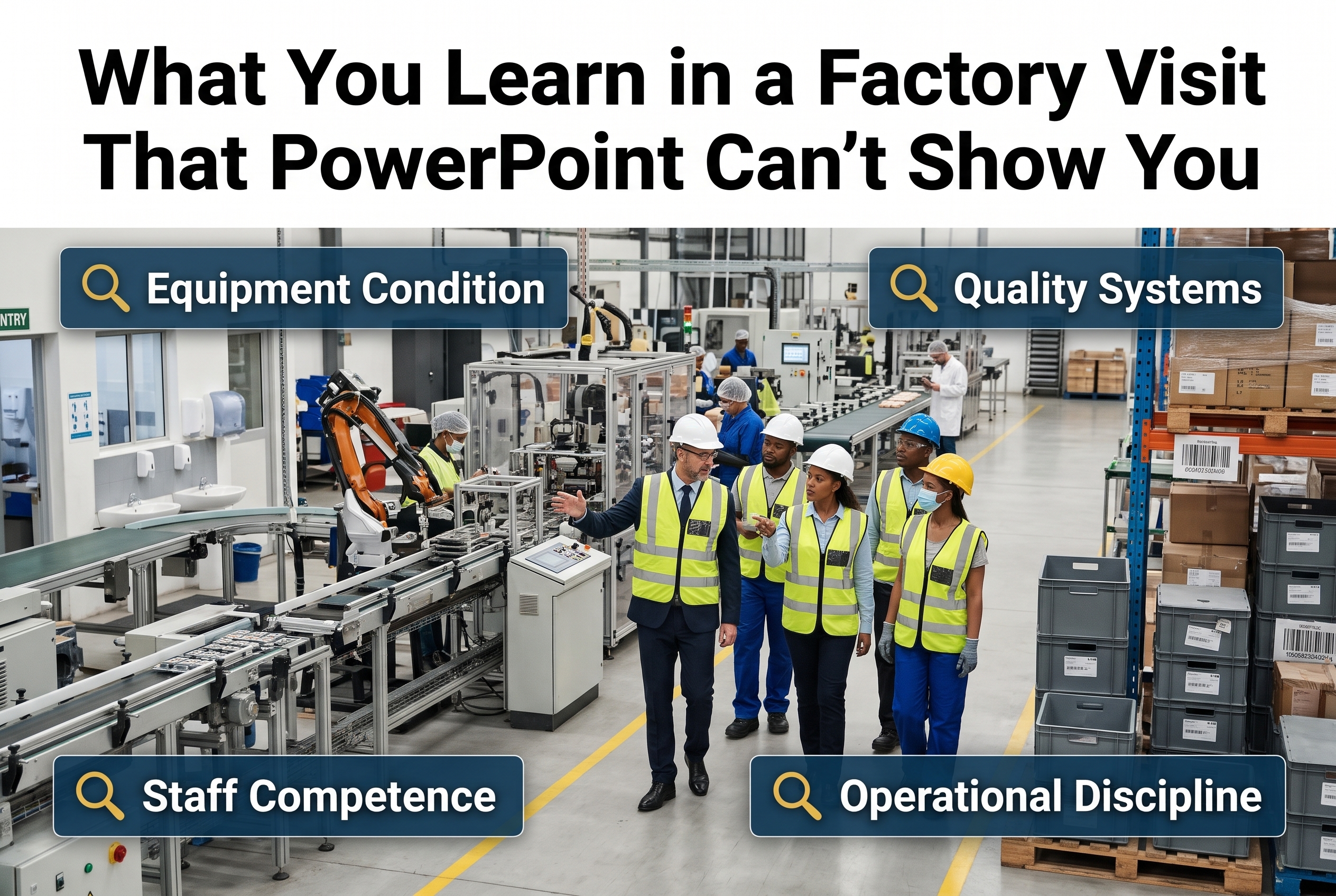
Visit the Factory Floor
Pictures can be impressive.
Presentations can be polished.
The real story is usually found on the production floor.
When I conduct factory assessments, I pay attention to details such as:
-
Equipment condition
-
Production processes
-
Quality assurance systems
-
Product traceability
-
Staff competence
-
Maintenance culture
-
Inventory management practices
A two-hour walk through a facility often reveals more than months of email exchanges.
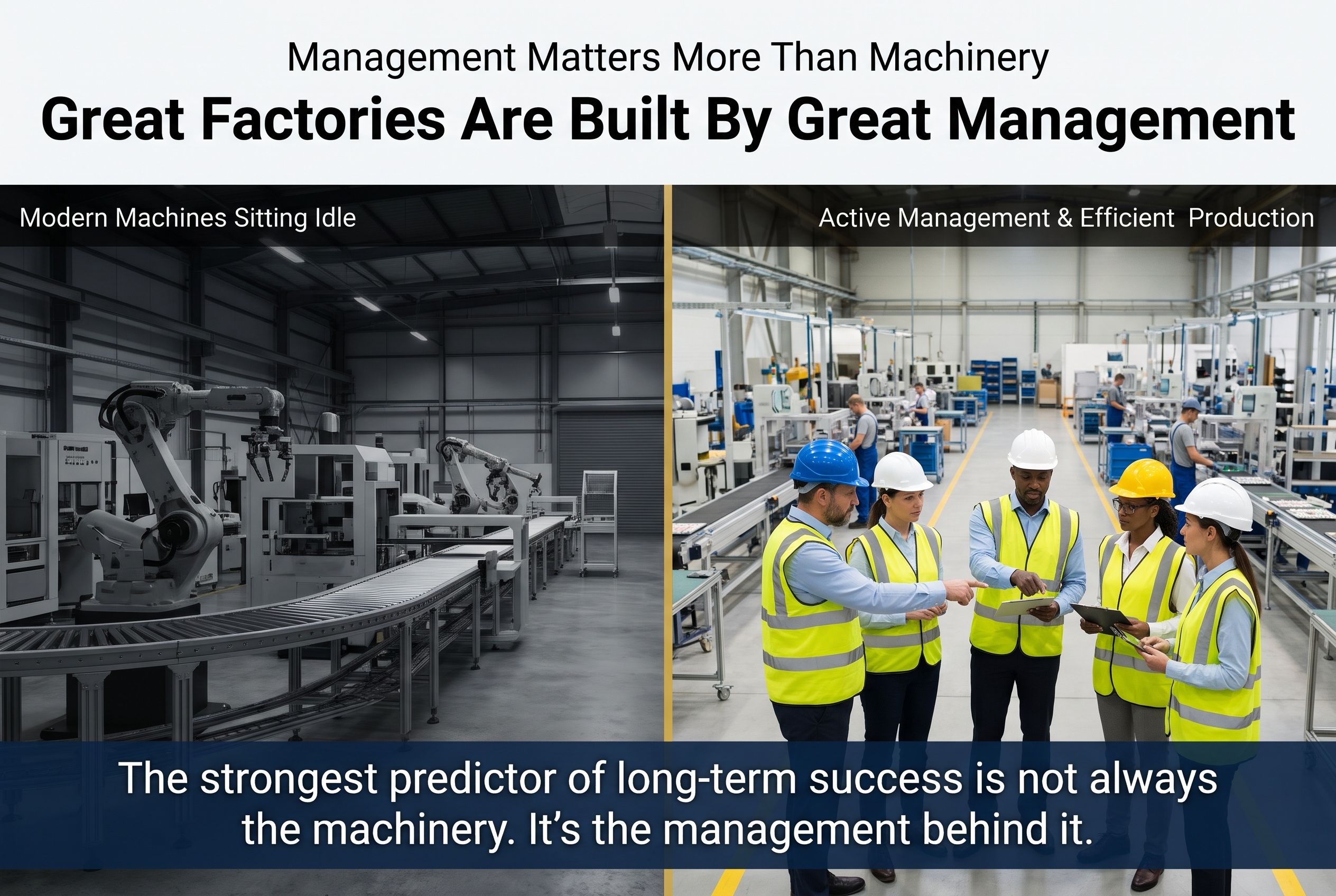
Evaluate Management, Not Just Machinery
Many companies focus heavily on machinery and infrastructure.
In my experience, management quality is often a stronger predictor of long-term success than the equipment itself.
A modern factory with poor management can create endless challenges.
On the other hand, a well-managed facility with a strong leadership team can adapt, learn, and scale effectively.
When assessing a potential partner, spend time understanding:
-
Leadership capability
-
Decision-making processes
-
Financial discipline
-
Commitment to quality
-
Openness to international standards
Remember, you are not entering a transaction. You are entering a relationship.
Understand Their Distribution Ecosystem
One of the biggest advantages local partners bring is market knowledge.
A good manufacturing partner should understand:
-
Consumer preferences
-
Regional buying patterns
-
Distribution channels
-
Regulatory landscapes
-
Retail networks
The best partnerships combine global product expertise with local market intelligence.
This combination significantly increases the probability of success.
Conduct Independent Due Diligence
This is the stage many companies skip because they want to move quickly.
Unfortunately, rushing due diligence often leads to expensive lessons.
I recommend evaluating:
-
Corporate structure
-
Ownership records
-
Litigation history
-
Regulatory standing
-
Financial stability
-
Operational track record
-
Industry reputation
The objective is not to find a perfect partner.
The objective is to avoid avoidable risks.
Look Beyond the First Deal
The strongest manufacturing partnerships are built with long-term growth in mind.
Before signing any agreement, ask yourself:
-
Can this facility support future expansion?
-
Can production scale with demand?
-
Is management interested in innovation?
-
Can international standards be maintained consistently?
A partner who can support your first product launch today should ideally be able to support your regional expansion tomorrow.
What I Tell Every Foreign Executive Looking at Africa
Africa presents one of the most exciting growth opportunities in the world today.
But success here is rarely achieved by simply copying strategies that worked elsewhere.
The companies that win in Africa are usually the ones that invest time in understanding local realities, building the right partnerships, and conducting proper market entry due diligence.
In many cases, the difference between a successful expansion and an expensive mistake comes down to choosing the right local partner.
At Routrix Africa Ltd, a significant part of our work involves helping international manufacturers identify, assess, audit, and engage credible local manufacturing partners across Nigeria and West Africa.
We have learned that the right partnership can shorten market entry timelines, reduce investment risk, accelerate growth, and create long-term value for both parties.
And if there is one lesson I have learned from working with both local manufacturers and international brands, it is this:
Don’t rush to find a factory. Take the time to find a partner.
The right partner won’t just help you manufacture products. They will help you build a sustainable business in Africa.
Are you evaluating manufacturing partnerships in Nigeria or West Africa?
Let’s have a conversation. We help international manufacturers identify vetted production partners, conduct due diligence, and develop practical market entry strategies that minimize risk and accelerate growth.
📩 Send me a direct message or visit www.routrixafrica.com.ng to learn more.

Jean Claude Agbortem Obi is a business consultant specialising in market entry, business development and commercial expansion across African markets, with a particular focus on FMCG and pharmaceutical businesses.
Through Routrix Africa, he works with international and African companies seeking to navigate the complexities of African markets, including distributor selection, route-to-market development, market intelligence and commercial expansion.
His perspective is grounded in a practical understanding of the realities that determine whether a brand succeeds beyond the boardroom and reaches the consumer at the point of purchase.
His central philosophy is simple: African market entry should not end with getting into the market. The real objective is building a sustainable pathway to commercial success.